

Trackback is defined as a message that is sent when a link has been created to somebody’s blog from another website, which allows a link to be created in the other direction. In other words, it allows blog sites to “share” readers.
For example: If you just posted a short article discussing Sarah Hale‘s letter to President Lincoln requesting Thanksgiving be a holiday and after that just surf upon a similar or related article on another site, you might use the trackback device to notify the other poster of your article. Therefore, your trackback notification, which is simply the permalink to your blog post coupled with some other basic information concerning your site appears on the post on the other blogger’s site—the viewers of that site will likewise be informed that you something to say on the subject and they just might pay you a visit.

Everyone has the capacity to have trackback, but not everyone does. Some blogs possess this trackback construct as well as others. The bright side to this unclear specter is that Haloscan (the preferred comment monitoring program) is currently using a trackback feature for those who don’t have it. If you have WordPress you will find the option to allow pingbacks and trackbacks. Remember enrolling in Trackback will most definitely provide you with trackback ability but you will only be able to Trackback to a message on a blog site that has Trackback too. Another downside—if you wind up being marked as a “Trackback Spammer” by sending out disconnected Trackbacks it’s a possibility you could be banned from the offended blog sites.
How it functions: Trackback functions by sending a “ping” (an electronic alert) from your blog site to one more blog site notifying them of your post. Also, this ping also notifies their Trackback program to detail your post. Some bloggers moderate their trackbacks, i.e., they manually review each trackback notification and verify that it is certainly an associated message– this protects against spammers from relating their scrap blog posts to real blogs. If the blog writer reviews your message and also locates its pertinence he or she may permit the trackback. Your post will afterward be listed as a trackback on the other blog site.
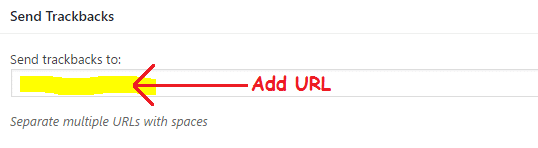
Creating a Trackback: First, you must acquire the “Trackback URL” from the message you wish to send your Trackback notification. If the message does not have a Trackback URL, either the site does not have Trackback ability or, it has been switched off. Secondly, duplicate that Trackback URL onto the appropriate location on your blog site’s message. Usually, this is recognized by a recommendation to “Trackback pings” or “Trackback URLs.” Finally, republish your blog site. Your Trackback software automatically sends out the Trackback ping to the target’s blog post.
That’s all there is to it! If accepted, your Trackback, including the permalink to your blog post, will be sent to the target blog post and your Trackback will be provided.
Thank you for your continued readership and support. Until next week…Blessings and Peace!
© Rhema International 2023. Unauthorized use and/or duplication of this material without express and written permission, from this blog’s author and/or owner, is strictly prohibited. Excerpts and links may be used, provided that full and clear credit is given to Rhema International.
 Rhemalogy