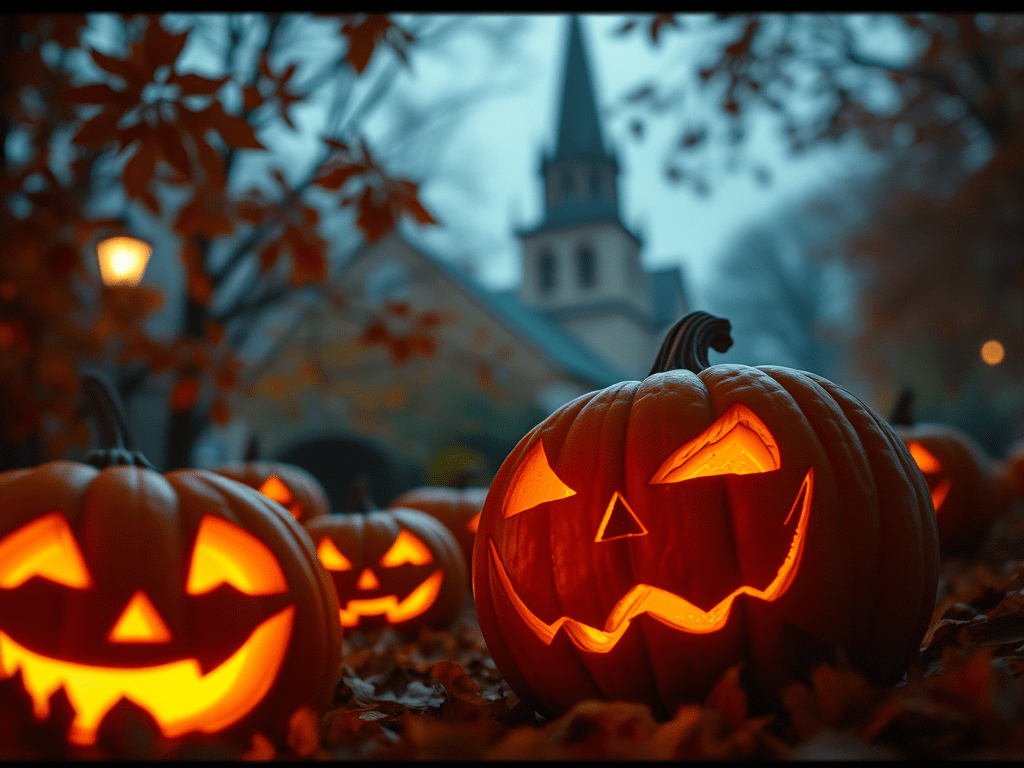
Halloween is thought to have influences from Christian beliefs and practices. The English word ‘Halloween’ comes from “All Hallows’ Eve”, being the evening before the Christian holy days of All Hallows’ Day (All Saints’ Day) on 1 November and All Souls’ Day on 2 November. Since the time of the early Church, major feasts in Christianity (such as Christmas, Easter and Pentecost) had vigils that began the night before, as did the feast of All Hallows’. These three days are collectively called Allhallowtide and are a time when Western Christians honor all saints and pray for recently departed souls who have yet to reach Heaven. Commemorations of all saints and martyrs were held by several churches on various dates, mostly in springtime. In 4th-century Roman Edessa it was held on 13 May, and on 13 May 609, Pope Boniface IV re-dedicated the Pantheon in Rome to “St Mary and all martyrs”. This was the date of Lemuria, an ancient Roman festival of the dead.
By the end of the 12th century, the celebration had become known as the holy days of obligation in Western Christianity and involved such traditions as ringing church bells for souls in purgatory. It was also “customary for criers dressed in black to parade the streets, ringing a bell of mournful sound and calling on all good Christians to remember the poor souls”.
The Allhallowtide custom of baking and sharing soul cakes for all christened souls, has been suggested as the origin of trick-or-treating. The custom dates back at least as far as the 15th century, and was found in parts of England, Wales, Flanders, Bavaria and Austria. Groups of poor people, often children, would go door-to-door during Allhallowtide, collecting soul cakes, in exchange for praying for the dead, especially the souls of the givers’ friends and relatives. This was called “souling”. Soul cakes were also offered for the souls themselves to eat, or the ‘soulers’ would act as their representatives.
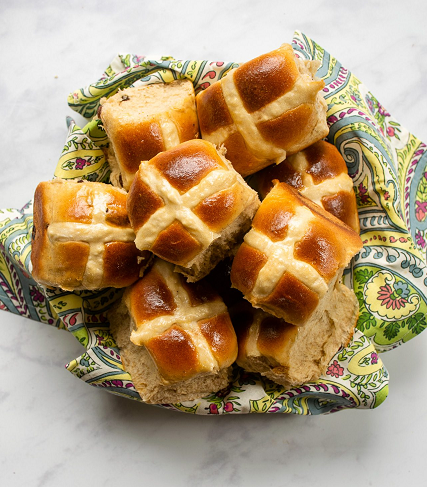
As with the Lenten tradition of hot cross buns, soul cakes were often marked with a cross, indicating they were baked as alms. Shakespeare mentions souling in his comedy The Two Gentlemen of Verona (1593). While souling, Christians would carry “lanterns made of hollowed-out turnips”, which could have originally represented souls of the dead; jack-o’-lanterns were used to ward off evil spirits.
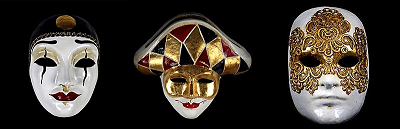
Christian minister Prince Sorie Conteh linked the wearing of costumes to the belief in vengeful ghosts: “It was traditionally believed that the souls of the departed wandered the earth until All Saints’ Day, and All Hallows’ Eve provided one last chance for the dead to gain vengeance on their enemies before moving to the next world. In order to avoid being recognized by any soul that might be seeking such vengeance, people would don masks or costumes”.
Bibliography:
- Barr, Beth Allison (28 October 2016). “Guess what? Halloween is more Christian than Pagan”. The Washington Post. Archived from the original on 2 November 2021. Retrieved 15 October 2020.
- Hopwood, James A. (2019). Keeping Christmas: Finding Joy in a Season of Excess and Strife. Wipf and Stock Publishers. p. 47. ISBN 978-1-5326-9537-7.
- Rogers, Nicholas. Halloween: From Pagan Ritual to Party Night. Oxford University Press, 2002. pp. 22, 27. ISBN 0-19-516896-8.
- New Proclamation Commentary on Feasts, Holy Days, and Other Celebrations (Bill Doggett, Gordon W. Lathrop), Fortress Press, p. 92
- Benham, William (1887). The Dictionary of Religion: An Encyclopedia of Christian and Other Religious Doctrines, Denominations, Sects, Heresies, Ecclesiastical Terms, History, Biography, Etc. Cassell. p. 1085
- Holy Women, Holy Men: Celebrating the Saints. Church Publishing, Inc. 2010. p. 662. ISBN 978-0-89869-678-3.
- Saunders, William. “All Saints and All Souls”. Catholic Education Resource Center. Archived from the original on 18 September 2016. Retrieved 19 September 2016.
- Melton, J Gordon (editor). Religious Celebrations: An Encyclopedia of Holidays, Festivals, Solemn Observances, and Spiritual Commemorations, Volume 1. ABC-CLIO, 2011. p.22
- The World Review – Volume 4, University of Minnesota, p. 255
- Rogers, Nicholas (2001). Halloween: From Pagan Ritual to Party Night. Oxford University Press. pp. 28–30. ISBN 978-0-19-514691-2.
- “Halloween”. Encyclopædia Britannica. Archived from the original on 30 October 2012. Retrieved 25 October 2012.
- Hutton, pp. 374–375
- Miles, Clement A. (1912). Christmas in Ritual and Tradition. Chapter 7: All Hallow Tide to Martinmas Archived 4 November 2013 at the Wayback Machine.
- Mary Mapes Dodge, ed. (1883). St. Nicholas Magazine. Scribner & Company. p. 93.
‘Soul-cakes,’
- DeMello, Margo (2012). A Cultural Encyclopedia of the Human Face. ABC-CLIO. p. 167. ISBN 978-1-59884-617-1
- Cleene, Marcel. Compendium of Symbolic and Ritual Plants in Europe. Man & Culture, 2002. p. 108.
- Levene, Alysa (2016). Cake: A Slice of History. Pegasus Books. p. 44. ISBN 978-1-68177-108-3.
- The Two Gentlemen of Verona Act 2, Scene 1.
- Pulliam, June; Fonseca, Anthony J. (2016). Ghosts in Popular Culture and Legend. ABC-CLIO. p. 145. ISBN 978-1-4408-3491-2.
- Rogers, p. 57
- Carter, Albert Howard; Petro, Jane Arbuckle (1998). Rising from the Flames: The Experience of the Severely Burned. University of Pennsylvania Press. p. 100. ISBN 978-0-8122-1517-5
- Guiley, Rosemary (2008). The Encyclopedia of Witches, Witchcraft and Wicca. Infobase Publishing. p. 183. ISBN 978-1-4381-2684-5.
- Prince Sorie Conteh (2009). Traditionalists, Muslims, and Christians in Africa: Interreligious Encounters and Dialogue. Cambria Press. ISBN 978-1-60497-596-3
 Rhemalogy