
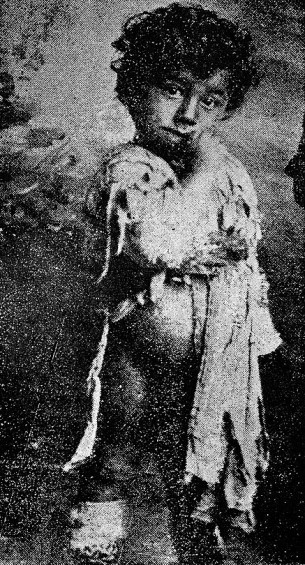
In the early twentieth century, a dark chapter in history unfolded as the Turks set out to annihilate every Armenian on their soil. The victims, descendants of the world’s first Christian nation, faced unspeakable horrors at the hands of their Muslim oppressors. After disarming the Armenians in 1914, the Turks embarked on a genocidal campaign that spanned the duration of World War I.
In some regions, local governors showed reluctance to carry out the brutal orders from central authorities. Those who refused were swiftly replaced with individuals willing to commit heinous acts against the helpless Christians. In Aleppo, a temporary reprieve was bought with bribes, highlighting the desperate attempts by Armenians, predominantly from Turkey’s prosperous middle class, to secure their safety.
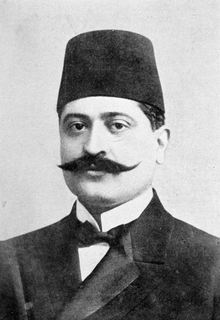
However, the respite was short-lived as Interior Minister Mehmed Talaat issued a chilling directive on March 9, 1915, commanding the complete eradication of Armenians on Turkish soil. The ruthless edict spared no one, not even infants in cradles, as the government took full responsibility for the massacre. The atrocities committed in Aleppo were a stark reminder of the inhumanity that prevailed during those dark times.
The systematic slaughter of Armenian men, the torture of women and children, and the despicable acts of rape and enslavement inflicted upon the victims painted a grim picture of the horrors they endured. Talaat and his cohorts were accountable for the deaths of over one and a half million Armenians, turning a blind eye to the pleas of world leaders and the international community.
Despite efforts to deny or distort the truth, the atrocities committed against the Armenians were well-documented by eyewitnesses and historical records. The silence that echoed from the Islamic world in the face of such barbarity remains a somber reminder of the collective failure to prevent the senseless loss of innocent lives.
As we reflect on this tragic chapter in history, let us honor the memory of those who perished and strive to ensure that such atrocities are never repeated. May we stand in solidarity with the Armenian community, offering our support and remembrance as we continue to seek justice and recognition for the victims of the Armenian Genocide.
ALSO ON THIS DAY
1463 – Catherine of Bologna an Italian Poor Clare nun, writer, teacher, mystic, artist, and saint died on this day. The patron saint of artists and against temptations, Catherine de’ Vigri was venerated for nearly three centuries in her native Bologna before being formally canonized in 1712 by Pope Clement XI. Her feast day is 9 March.
1509 – Martin Luther received his Bachelor of Bible degree from the University of Erfurt.
1661 – Cardinal Jules Mazarin. He had been noted for diplomacy and high taxation while he served as First Minister of France; died in Vincennes. His delegates helped negotiate the Peace of Westphalia in 1648.
1831 – Charles Finney successfully concluded a six-month series of meetings at the Third Presbyterian Church in Rochester, New York. The city was dramatically transformed by his preaching. One hundred thousand people were reportedly converted.
1948 – Hymn-writer Civilla Durfee Martin whose many gospel songs include “God Will Take Care of You”, “One of God’s Days”, “Going Home”, “The Old Fashioned Way”, and “His Eye Is on the Sparrow,” died in Atlanta, Georgia.
1954 – Pentecostal evangelist Tommy Hicks arrives in Argentina and requests a large stadium. Local ministers, who have had little success winning souls, try to dissuade him, saying it is impossible to obtain a large stadium and more impossible to fill it. Hicks insists and is able to obtain consent from Argentina’s president Juan Perón after healing him of a skin condition. After weeks of healing services in April and May, a larger stadium will be needed to handle the huge crowds.
*Information accessed ChristianHistoryInstitute.org
and Rhemalogy.com 08 March 2025.
 Rhemalogy
I knew nothing about this, thank you for enlightening me.
LikeLike
You are so welcome my friend. Thanks for stopping by. We need to know our history.
LikeLike
Sadly, the Islamic world is again turning a blind eye to the atrocities of Hamas. Even the very few voices that condemn Hamas do so more out of a sense that Hamas was unprepared and caused destruction of Islamic people because they could not complete the eradication of Israel.😣
LikeLiked by 1 person