
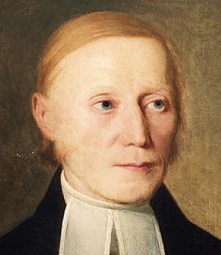
As a young boy, Theodor Fliedner displayed a unique blend of traits that were rarely found together. He had a profound passion for reading, often dedicating hours to studying and mastering Latin while his peers engaged in play. Yet, when he did join in, he played fiercely, often outpacing and outmatching boys two or three years his senior. His bravery was notable as well; when a Cossack soldier stole smoked hams from his family’s farm, Fliedner boldly threw a block of wood at the thief, who refrained from retaliating since his comrades had already departed.
Additionally, he was skilled with a knife, crafting wooden spoons and mugs with ease. Tragedy struck when Fliedner’s father, a benevolent pastor, succumbed to a fever while his eldest sons were still attending high school. A local manufacturer generously funded the boys’ education, while friends contributed to support Fliedner’s mother and their numerous siblings.
Despite this assistance, Fliedner had to mend his own clothes, darn his socks, and chop firewood to earn pocket money. He later recalled that during his confirmation, his primary worry was to avoid damaging the knees of his new trousers. After graduating from high school, he enrolled in college to prepare for the ministry, attending lectures from professors who questioned the Bible’s validity. He received his preaching license without a genuine understanding of God. However, the devout life and discussions of a minister named Krafft prompted Fliedner to reassess his faith in Christ, leading to significant spiritual growth.
A small church in Kaiserwerth extended an invitation for him to become their pastor, which he gladly accepted. Shortly after his arrival, the local factory, the main economic lifeline for the community, went bankrupt, leaving many unemployed. Although he was offered a more prestigious position elsewhere, Fliedner chose to remain with his congregation, feeling a strong sense of duty. He traveled to churches in Germany and Holland to gather support for his community.
Upon returning to Kaiserwerth, he became actively involved in prison reform. Every other Sunday, he made the journey to a prison in Düsseldorf, serving as a chaplain to the inmates. When a woman was released from prison…
Also On This Day
1898 – C.H. Spurgeon‘s London tabernacle burns down. Efforts to rebuild it commence at once.
1962 – Theologian Karl Barth is featured on the cover of Time magazine.
1988 – Wilson Rajil Sabiya, a Lutheran theologian, writes a letter to General Ibrahim Babangida, President and Commander-in-chief of the Armed Forces of the Federal Republic of Nigeria, alerting him to Muslim efforts to make Nigeria an Islamic country by infiltrating the police force.
2001 -A Peruvian Air Force aircraft shoots down a private airplane carrying missionaries, killing Veronica Bowers and her infant daughter, Charity.
Thank you for your continued readership and support. Until next week…Blessings and Peace!
© Rhema International 2024. Unauthorized use and/or duplication of this material without express and written permission, from this blog’s author and/or owner, is strictly prohibited. Excerpts and links may be used, provided that full and clear credit is given to Rhema International .
 Rhemalogy