
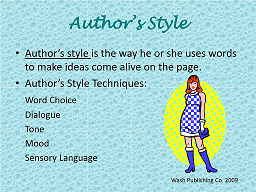
An author’s style and language refer to how they use words, sentence structure, figurative language, and other literary devices to create a unique voice and convey meaning in their writing. It’s the individual way an author expresses themselves, encompassing elements like tone, diction, and the overall effect on the reader. Essentially, it’s the “how” of writing, distinct from the “what” of the story or subject matter.
Key Components of Author’s Style:
- Diction (Word Choice): The specific words an author selects, including their level of formality, imagery, and connotations, contribute to their style.
- Sentence Structure: The length and arrangement of sentences, whether they are simple or complex, long or short, can significantly impact the rhythm and flow of the writing.
- Figurative Language: The use of metaphors, similes, personification, and other literary devices to create vivid imagery and deeper meaning.
- Tone: The author’s attitude or feeling toward the subject matter, which can be serious, humorous, sarcastic, etc.
- Voice: The unique personality or perspective that comes through in the writing, often shaped by the author’s background and experiences.
- Imagery: The use of sensory details to create vivid mental pictures for the reader.
- Punctuation and Grammar: While these are often considered the “rules” of writing, the way an author uses them can also be part of their style.
Example:
Ernest Hemingway’s Writing Style
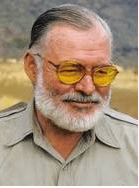
Ernest Hemingway’s writing style? “Simple yet profound” best describes Ernest Hemingway’s writing style, characterized by short, declarative sentences and sparse, descriptive language.
Ernest Hemingway’s style is often called “simple yet profound.” His writing is made up of short, clear sentences and minimal description. He used a straightforward way to tell stories, with everyday language that reveals big ideas and feelings. His words are direct and easy to understand, often leaving things unsaid or hinted at.
This open style invites readers to interpret his work in their own way. Hemingway focused on themes like bravery, inner strength, and what it means to be human. These themes reflect his life experiences and his view of the world. His writing stands out for its honesty and focus on the essential.
In The Old Man and the Sea, Hemingway’s writing mirrors the determination and resilience of the old fisherman, Santiago, as he battles against nature to catch a giant marlin.
Example: “He was an old man who fished alone in a skiff in the Gulf Stream, and he had gone eighty-four days now without taking a fish.” (The Old Man and the Sea)
Why is it important?
- Individuality: Style helps make an author’s work unique and distinguishable from others.
- Engagement: A compelling style can draw readers in, create mood, and enhance their understanding of the text.
- Interpretation: Recognizing an author’s style can help readers better understand their intentions and the overall message.
In closing, remember that an author’s style and language are the tools they use to shape the reader’s experience, convey their message effectively, and create a unique and memorable literary work.
Now that you’ve gotten a better understanding, get back to those darn keys and get busy!
Until next week…Blessings and Peace!
© Rhema International 2025. Unauthorized use and/or duplication of this material without express and written permission from this blog’s author and/or owner is strictly prohibited. Excerpts and links may be used, provided that full and clear credit is given to Rhema International.
 Rhemalogy
I recall reading an interview with Hemingway after he had published “The Old Man and the Sea.” He was asked how he put so much symbology into the short novel. He replied (something like this): “I did not put ANY symbology in ‘The Old Man and the Sea,’ but I knew if I wrote about a real old man, a real boy and a real sea, everyone would see all kinds of symbology in it.”
Smart guy; sad, but smart.😉
LikeLike
Thank you for those comments and thank you so much for stopping by. Have a great new week! Blessings and Peace!
LikeLike