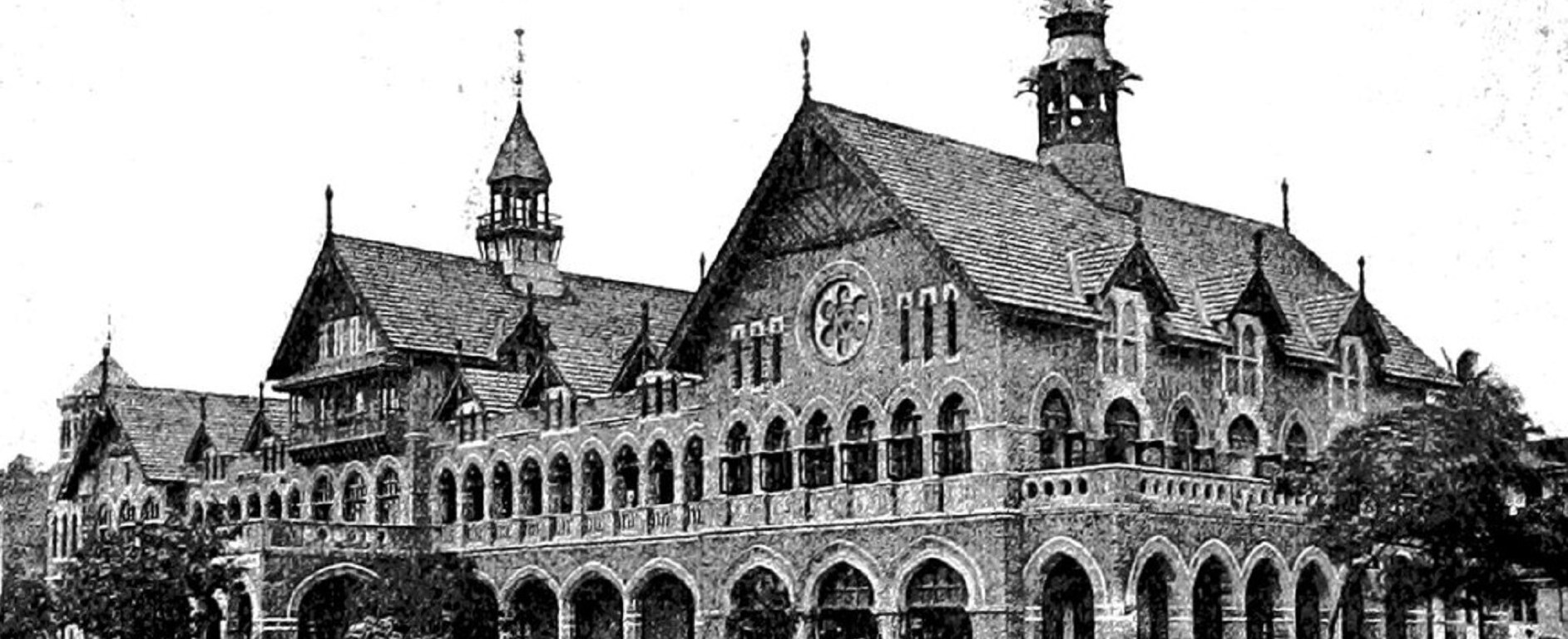
During the nineteenth century, Protestant missionaries in India convened decennial conferences—meetings held every ten years. On 4 January 1893, the third and largest of these gatherings came to a close. The week-long conference was hosted by Wilson College, an institution of the Free Church Mission, in Bombay (now Mumbai).
The conference began on 29 December 1892. Although more than seven hundred individuals are known to have participated, the official attendance—calculated from membership tickets submitted on the final day—stood at 620. Among those present were 256 women missionaries and 67 Indian Christian workers.
A wide range of issues was addressed, with the proceedings later published in a two-volume report. Topics included the social and legal status of Indian Christians, the organization and financial independence of the indigenous church, ministry among women and youth, the production and distribution of Christian literature, cooperation among missionaries of different theological traditions, and numerous other matters considered vital to missionary work.
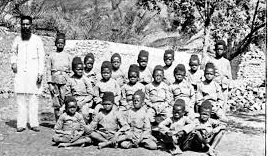
Each paper presented was followed by a discussion, during which the missionaries drew on their extensive practical experience. These exchanges often revealed striking details. In a session devoted to work among the lower classes, the Rev. Lundborg recounted the consequences of admitting a pariah boy to a mission school: “[T]he poor sweeper boy entered the mission school, and as soon as he had entered, the whole school, 150 boys and five schoolmasters, absconded.” He explained that this was an attempt to force the school’s closure, though it was later reopened without rehiring the former teachers—an episode that, in his view, illustrated the depth of social prejudice. In the same session, the Rev. J. Parsons observed that ministry among the lower classes in certain regions had to be paired with “social forms of work” to address severe economic distress.
At the conclusion of the conference, the delegates issued an urgent appeal “to the Church of Christ in Europe, America, Australasia, and Asia,” calling for additional missionaries and medical workers to meet what they described as the overwhelming evangelistic needs of India. The appeal included several specific clauses, among them the following:
We re-echo to you the cry of the unsatisfied heart of India. With it we pass on the Master’s word for the perishing multitude: ‘Give ye them to eat.’
An opportunity and a responsibility never known before confronts us. . . .
India has fifty millions of Mohammedans, a larger number than is found in the Turkish Empire; and far more free to embrace Christianity. Who will come to work for them?
Scores of missionaries should be set apart to promote the production of Christian literature in the languages of the people. . . .
Industrial schools are urgently needed to help in developing robust character in Christian youth and to open to them new avenues for honest work. . . .
The manifestation of Christ is greatest to those who keep his commandments, and this is his commandment: ‘Go ye into all the world and preach the Gospel to every creature.’
Also On This Day
1577 – Execution by fire of Hans Bret, a young Anabaptist Protestant in Antwerp. He had been tortured for months in an attempt to force him to deny his faith, but kept such a bold testimony that his persecutors clamped and seared his tongue so that he could not preach to the crowd when taken to the stake.
1821 – Mother Elizabeth Bayley Seton, the first native-born American canonized by the Catholic church, died. She had founded the American Sisters of Charity and was behind the present system of Catholic parochial schools.
1953 – The Catholic Hour airs for the first time over NBC television.
1965 – T. S. Eliot, the most influential English poet of the twentieth century, converted to Christianity and joined the Church of England; died in London, England.
Information retrieved from ChristianHistoryInstitute.org and Rhemalogy.com.
 Rhemalogy
What stands out here is the discipline of remembrance.
This piece does not rush to interpret the past, but allows the record of the 1893 Bombay Conference to speak through context, numbers, voices, and consequence. The careful attention to proceedings, participation, and published outcomes honors both history and faith without collapsing either into rhetoric.
There is a quiet strength in presenting mission not as triumph, but as responsibility—grounded in labor, complexity, and human cost. This kind of writing preserves memory rather than consuming it, and that restraint gives the article its moral weight.
LikeLike
I am so glad tht you understand the interpretation of this post. And hope that in this analysis you truly enjoyed it. Thank you for taking the time to stop by, thank you for this insightul comment, and thank you for following this sight. Blessings and Peace!
LikeLiked by 1 person