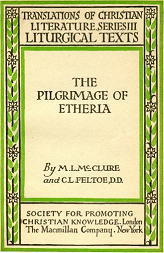
The Spanish nun Egeria undertook a lengthy pilgrimage across the biblical lands of the Middle East between 384 and 387. She recorded her experiences in a detailed journal intended for the religious community she had left behind. Although the opening and closing sections of her diary are missing, the surviving narrative begins as she approaches Mount Sinai.
Traveling from Egypt, she sought a deeper understanding of the events described in the books of Moses and later scriptural histories. At each sacred location, it was her practice to read aloud the corresponding biblical passage, linking place and text in a devotional way.
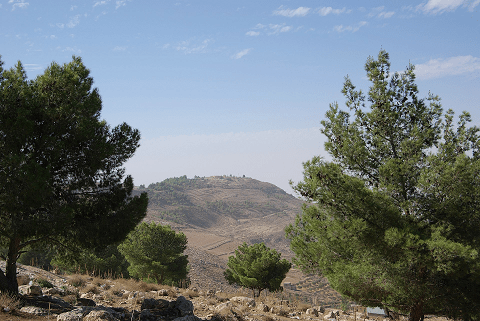
From Sinai, she retraced her steps to Egypt and then journeyed north along the coastal route to Jerusalem. There, she visited major holy sites before traveling to Mount Nebo, traditionally associated with the death of Moses. Her pilgrimage continued to the Jordan River, believed to be the site of John’s baptisms, to the brook connected with Elijah and the ravens, and finally to a reputed tomb of Job—said to have been identified through a holy vision, suggesting that even in the fourth century some shrines catered to pious curiosity.
After spending additional time in Jerusalem, she set out for Edessa, where tradition held that St. Thomas had died. From there, she traveled on to Constantinople, pausing at other sacred destinations along the way. Her account ends before a planned trip to Ephesus, with a promise to report further if circumstances allowed.
A substantial part of her journal describes the liturgical life of Jerusalem. In her time, Epiphany—celebrating the revelation of Christ—was observed with greater prominence than Christmas. Forty days later, on February 15, the faithful marked the Presentation of Jesus in the Temple, referred to as the “Quadragesima of the birth of our Lord.”
Egeria described the events in this wise: The fortieth day after the Epiphany is undoubtedly celebrated here with the very highest honor, for on that day there is a procession, in which all take part, in the Anastasis,* and all things are done in their order with the greatest joy, just as at Easter. All the priests, and after them the bishop, preach, always taking for their subject that part of the Gospel where Joseph and Mary brought the Lord into the Temple on the fortieth day, and Symeon and Anna the prophetess, the daughter of Phanuel, saw Him—treating of the words which they spake when they saw the Lord, and of that offering which His parents made. And when everything that is customary has been done in order, the sacrament is celebrated, and the dismissal takes place.
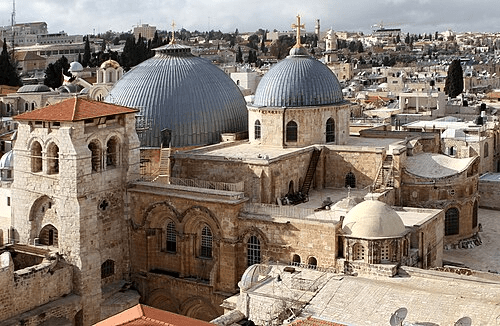
Egeria portrays this feast as one of exceptional splendor. A joyful procession gathered at the Anastasis (a rotunda at the Church of the Holy Sepulcher), and priests, followed by the bishop, preached on the Gospel account of Joseph and Mary presenting Jesus in the Temple and the witness of Simeon and Anna. After the appointed readings and prayers, the Eucharist was celebrated, and the congregation dismissed. The service followed an established pattern of psalms and scriptural readings—especially from Psalms, Galatians, and Luke—woven together with antiphons and repeated alleluias.
Also On This Day
1643 – John Campanius, Lutheran pastor and missionary to the American Indians, arrives in America (New Sweden on the Delaware River).
1905 – Death at Crawfordsville, Indiana, of Lew Wallace, author of Ben Hur. The novel had been conceived on a train ride while arguing about Christ’s divinity with famous agnostic Robert Ingersoll. It sold more than 300,000 copies in a decade, making it one of the best-selling religious books of the 1800s.
1960 – Repose (death) of Anthimus of Chios. After years of ascetic living and service to others, he had founded the Monastery of Panagia Voithia on the Island of Chios to take women and nuns displaced in a population swap between Turkey and Greece.
 Rhemalogy