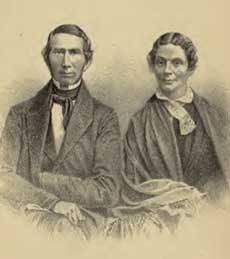
The daughter of a prominent Massachusetts citizen, Mary Longley became a teacher at 16, earning $1 a week. She saved her first earnings to give $12 to her father in gratitude for her education.
Under Rev. Dyer Burgess, she moved to Ohio to teach, where she met Stephen Rigg, a ministerial student. They married in 1837 and committed their lives to missionary work among Native American tribes. Traveling routes by land and river, they reached Fort Snelling and began learning the Dakota language. Stephen soon translated the Gospel of Mark, later producing a Dakota dictionary and full Bible.
The family moved to Lac-qui-parle, living for five years in a small unfinished room with their growing family. Life was difficult—marked by isolation, scarce comforts, and slow communication with home. Mary managed domestic work, taught English, and shared the gospel, even hiring marginalized Dakota women for laundry and teaching them Christianity. These women eventually formed the village’s first church.
The mission faced strong opposition: theft, violence, threats, and extreme hardship. The Riggs endured personal tragedy, including the drowning of Mary’s brother and the loss of their home and possessions in a fire.
During the Dakota conflict of 1862, they fled under dangerous conditions. Afterward, Stephen ministered to imprisoned Dakota, leading to many conversions and high demand for Dakota scriptures.
Mary’s health declined due to these hardships. Though she later moved to Wisconsin, she never fully recovered. She died of pneumonia on March 22, 1869. Shortly before her death, she expressed readiness to meet Christ, repeating, “He strengthens me.”
Also On This Day
325 – The Council of Nicaea was the first to unite the entire Christian world and remains one of the most consequential councils in Church history.
1457 – Johann Gutenberg, the inventor of movable type printing, wrote his first bible.
1923 – Three English women, Eva, Mildred, and Francesca, known as the China Trio returned to share the Gospel in the Gobi Desert.
 Rhemalogy