
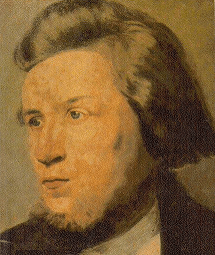
In his mid-twenties, Hans Nielsen Hauge became deeply dissatisfied with his Christian life and longed for a more genuine faith. After intense prayer and reflection, he experienced a powerful spiritual renewal in 1796, gaining assurance of salvation and a clear calling to share the message of repentance and faith in Jesus Christ.
He began traveling throughout Norway, preaching to ordinary people and urging them to turn to God. At the time, it was illegal for laypeople to preach without approval from the state church, but Hauge continued anyway. Because of this, he was imprisoned multiple times, yet each time he was released, he returned to preaching with even greater determination.
His message led to widespread spiritual revival, especially among rural communities. In addition to sharing the gospel, Hauge helped people improve their lives by teaching practical work skills and encouraging strong moral character. He also supported giving women a greater role in Christian gatherings.
Despite the positive impact of his work, many church leaders opposed him out of jealousy and had him imprisoned for nearly ten years. His health declined in later years, and he died in 1824 at the age of 53.
Hauge’s legacy endured far beyond his lifetime. He became a central figure in Norwegian Pietism, and his influence spread as his followers carried their faith to other parts of the world, leaving a lasting impact on Christian life and practice.
Also On This Day
1882 – Death at Clifton, England (near Bristol), of Dora Greenwell, Christian poet and hymn writer. Her two best-known hymns are “And Art Thou Come with us to Dwell?” and “I Am not Skilled to Understand.
1887 – Death at Newark, New Jersey, of hymn writer Ray Palmer. His most famous hymn is “My Faith Looks up to Thee.”
1927 – Death of Ambrosius of Georgia in Tbilisi. He had been the patriarch of all Georgia, a historian of his people and their church, and a staunch opponent of Soviet communism. The Soviets had imprisoned him and his death came shortly after his release.
1991 – Ezra Lawiri is fatally wounded by an artillery shell as the Sudanese battle around him. An Episcopal priest, educator, author, and translator, he had refused to take refuge in Kenya, saying death would overtake him wherever he was when his time came.
 Rhemalogy