
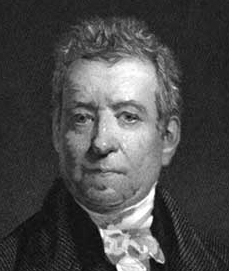
James Haldane boarded The Duke of Montrose at the age of 17 with books to prepare for a life at sea. Yet the Lord had appointed another course for him.
After becoming captain of the Melville Castle, Haldane proved his courage by single-handedly quelling a mutiny on a neighboring ship, risking his life to save its officers. Yet it was in the quiet of the harbor, not the heat of danger, that God seized his heart. Studying Scripture aboard the ship, Haldane became deeply convicted of his sin and later testified that God began a work of grace in his soul there. He prayed for release from his command, and—two days before sailing—was unexpectedly freed. Selling his share of the ship, he turned instead to gospel work.
His maritime career stretched across eight adventurous years. Haldane’s boldest act came after he passed his exams and took command of the Melville Castle. While the ship lay detained in harbor, a mutiny erupted on a nearby vessel, the Dutton. Though threatened by the mutineers, Haldane boarded the ship with cutlass in hand and, acting alone, freed the officers and brought the rebellion to an end. When two crewmen later attempted to destroy the Dutton by breaking into the powder magazine with live coals, Haldane’s swift courage again prevented disaster.
Yet it was during those quiet days in harbor that a greater battle began within his own heart. Haldane began reading the Bible, and a deep conviction settled on him that his soul was not at peace with God. “However dark my mind still was,” he later reflected, “I have no doubt but that God began a work of grace on my soul while living on board the Melville Castle.” He prayed earnestly to be released from his role as captain. Though it seemed impossible, God opened a way: just two days before the ship was to sail, Haldane was unexpectedly freed. He sold his share in the ship, providing for himself and his wife, and stepped forward in faith, trusting the quiet work God had begun.
Haldane went on to become a pastor and evangelist in Scotland, preaching Christ across neglected towns and remote islands. His sermons were known for their depth and for their insistence that the believer’s life is found only in union with Christ. Along with his brother, Robert Haldane, and others, James established 85 independent churches in Scotland and Ireland. Churches originated by the Haldanes practised baptism by immersion, weekly communion, and congregational polity (autonomous government). Though he founded Scotland’s first Congregational church, he was widely respected across denominations.
He died on February 8, 1851. When his wife told him, “You are going to Jesus,” his face shone, and he replied with joy, “Oh! Yes.”
Also On This Day
1865 – Birth of Lewis E. Jones, American YMCA director. Jones was also a hymnwriter, and his most enduring contribution (which he both wrote and composed) was “Power in the Blood.”
1950 – American missionary and martyr Jim Elliot wrote in his journal: ‘Sin in a Christian makes God seem distant, deaf. In the body, sin saps animation, as cancer does. In the soul, sin stifles the affections; as corrosion in the spirit, sin solidifies the attitudes, as a callous.’
1985 – Death in South Hamilton, Massachusetts, of Harold John Ockenga, neo-evangelical leader.
2001 – Death of Rousas John Rushdoony, a Presbyterian clergyman and theologian known as the “Father of Christian Reconstruction” who advocated strict implementation of biblical moral law in America.
 Rhemalogy