
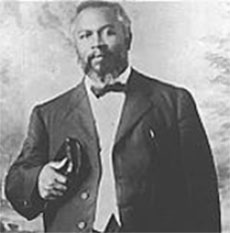
Planning to serve as a missionary in Africa, Janice Hutchins, an African-American preacher in Los Angeles, needed someone to lead the small storefront mission she had established. So she invited William J. Seymour to replace her. At the time, Seymour was in Texas studying under Charles Parham, a faith healer who promoted speaking in tongues as evidence of Spirit baptism. Although Parham advised him not to relocate to California, Seymour believed God was calling him. On February 22, 1906, he arrived in Los Angeles—an event that would prove pivotal for Pentecostalism.
It did not take long for Hutchins to reconsider her choice. Seymour preached that speaking in tongues was the sign of being filled with the Holy Spirit, a teaching she rejected. Suddenly, without a congregation or financial support, Seymour relied on the kindness of a couple who offered him a room in their home. There, he began holding prayer meetings, which quickly grew. By April, the gatherings had developed into a thriving congregation. The group eventually rented a building on Azusa Street, naming it the Apostolic Faith Mission—later widely known as the Azusa Street Mission.
The meeting space was simple—planks laid across barrels served as pews—but the services drew large crowds. A powerful revival erupted. People from varied denominational backgrounds, both Black and white, confessed sins, testified to spiritual experiences, and spoke in tongues. Some reported visions; others shouted, danced, trembled, or displayed unusual behaviors. Newspapers mocked the movement, yet Seymour remained steady, conducting three services a day, seven days a week, for three years. Participants carried the revival’s message throughout California and beyond.
News of the meetings spread through eyewitness reports and media coverage, attracting thousands to Los Angeles. Many visitors returned home inspired, helping to ignite similar revivals elsewhere. Despite ridicule—and at times outright persecution—due to the emotional worship, glossolalia, and some adherents’ reluctance to seek medical treatment, the movement endured. Its emphasis on a life-changing encounter with the Holy Spirit and a renewed commitment to Christ left a lasting mark. Today, numerous churches and ministries trace their roots to the Azusa Street revival.
Seymour urged believers, “Don’t go out of here talking about tongues; talk about Jesus.” Parham, however, sharply criticized the revival, calling it “spiritual power prostituted.”
Also On This Day
1173: Canonization of Thomas Becket. Pope Alexander III canonized the Archbishop of Canterbury, who was murdered in 1170.
1595: Execution of Robert Southwell: A Jesuit poet and priest, he was hanged, drawn, and quartered at Tyburn, London, after suffering extreme torture.
1869: Madagascar Royal Conversion: Queen Ranavalona II was baptized, marking a major turning point for Christianity in Madagascar
 Rhemalogy
My mother attended Aimee Simple McPherson’s church based Bible school after running away from home in VA because Grandma did not want her to be a nurse! An older sister had died from a nosocomial infection and she did not want to lose another.
Mom served as an evangelist with another sister-in-Christ for several years working their way across the USA back east; met my Dad in Kansas when the held a tent meeting there and he was baptized into the Holy Spirit.🤠
LikeLike
Bless God! Thanks you for that inspiring story. Be and stay blessed!
LikeLiked by 1 person