
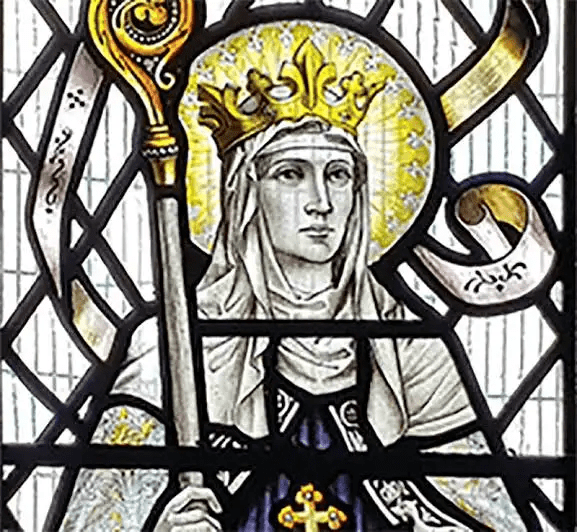
Easter celebrates Christ’s resurrection—so central to Christian faith that it quickly became a preferred day for baptisms. On 12 April 627, during the conversion of King Edwin of Northumbria, many were baptized at York, including a thirteen-year-old girl named Hild, who would later shape English Christianity.
Twenty years later, Hild became a nun. Though she planned to join a convent in Gaul, Bishop Aidan persuaded her to remain in England and lead a monastic community. She first oversaw a mixed (double) monastery at Hartlepool, then founded a larger one at Streoneshalh—later called Whitby—earning her the name Hild of Whitby.
A gifted leader, Hild emphasized Scripture and service. Her influence was profound: five of her students became bishops. She also supported Caedmon, an early poet who brought biblical stories to common people in Old English.
Hild played a key role in one of the most important moments in English church history—the Synod of Whitby (664), held at her monastery to resolve differences between Celtic and Roman Christian practices. Though she favored the Celtic tradition, she accepted the king’s decision to follow Roman customs, demonstrating humility and unity.
After years of illness, Hild died in 680, remembered for her leadership, wisdom, and lasting impact on the English church.
Also On This Day
1860 – Presbyterian missionary Ashbel Green Simenton organizes his first Sunday school in Brazil.
1972 – Twentieth anniversary of Watchman Nee’s imprisonment, five years more than his maximum sentence. Within weeks the evangelical pastor will be dead.
 Rhemalogy