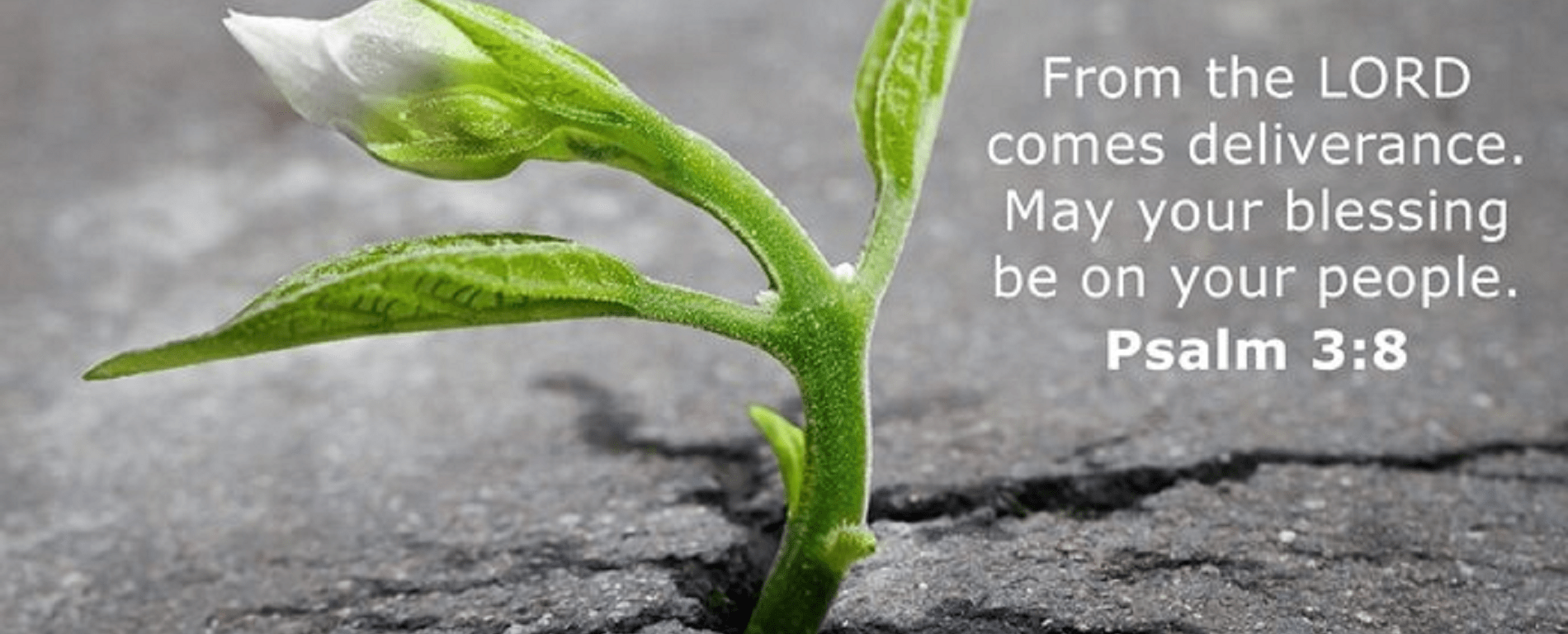
Salvation belongs to the Lord.
Your blessing is upon Your people. Selah (Psalm 3:8 NKJV)
Before posting the *Verse of the Day, I normally check to make sure the scripture being used is not a repeat. However, because of the pressing time, I forgot to do so. And in so doing, when I read the scripture again the next day, I noticed it was the third time this particular scripture had been posted.
Now I’m pondering…What is so pressing about Psalm 3:8 that out of all the *Verse of the Day posts, this particular one was posted three times? Was it meant to emphasize the importance of our salvation as children of the Most High? Was it meant to emphasize where our blessings come from? And why was it ended with Selah?
Perhaps the repetition itself is the message. Scripture has a way of finding us when we need it most, even when we think we are the ones choosing it. Psalm 3:8, appearing not once, not twice, but three times, feels less like an oversight and more like an invitation—an invitation to slow down, to listen, and to reflect more deeply on what is being said beneath the surface of familiar words.
“Salvation belongs to the Lord; Your blessing is upon Your people. Selah.”
In a world that constantly pushes us to strive, earn, prove, and perform, this verse quietly but firmly recenters everything. Salvation does not belong to our efforts, our status, our good behavior, or our ability to “get it right.” It belongs to the Lord. Period. That truth alone is powerful enough to warrant repetition. As children of the Most High, it reminds us that our identity is not rooted in what we do, but in who He is. When life feels chaotic or uncertain, this verse calls us back to the foundation: God is the source, God is the sustainer, God is the deliverer.
Then there is the second half of the verse: “Your blessing is upon Your people.” Not someday. Not conditionally. Not reserved for a select few. But upon His people. This speaks to divine covering, favor, and provision that flows from relationship, not perfection. It challenges the mindset that blessings are random or self-made and gently reminds us that everything we truly need flows from God’s hand. Perhaps this verse was repeated to drive home that truth—especially in seasons where it’s easy to forget where our help really comes from.
And then, there is Selah. Selah is not just punctuation; it’s an instruction. A holy pause. A moment to stop reading and start reflecting. It asks us to sit with the weight of the words instead of rushing past them. In the context of Psalm 3, which was written during a time of distress and opposition, Selah becomes even more meaningful. It suggests trust in the midst of trouble, confidence in God’s sovereignty, and rest in His promises—even when circumstances say otherwise.
So maybe Psalm 3:8 appeared three times in my *Verse of the Day posts because it needed to be heard three times. Maybe it was meant to interrupt routine and draw attention to something timeless: that salvation is secure in God, blessings flow from Him alone, and reflection is just as important as proclamation. Sometimes God repeats Himself not because we didn’t hear Him, but because He wants us to understand.
In the end, this verse reminds us to trust, to receive, and to pause. To remember that no matter what presses in on us, salvation belongs to the Lord, His blessing rests on His people, and there is always space—through Selah—to breathe, reflect, and realign our hearts with Him.
Thank you so much for your support and your continued readership. Have a blessed new week!
© Rhema International 2026. Unauthorized use and/or duplication of this material without express and written permission from this blog’s author and/or owner is strictly prohibited. Excerpts and links may be used, provided that full and clear credit is given to Rhema International.
 Rhemalogy