

The other day, came across a website that asked you to subscribe. But as soon as you pressed the subscribe button, it asked you for a donation to complete your subscription. And you could not join without giving this donation. Had this been a business website, I never would’ve given it a second thought because this is expected. But it was a ministry.
Not speaking from a place of judgment, but of concern. I understand that it takes money to aid in ministry work. It costs many of us money to keep our websites and blogs running. I suppose my question is, do we exclude those who may not be able to donate? Who may be simply searching for answers to situations that are life-altering for them?

I don’t believe Jesus would’ve excluded anyone from His teachings or healings because they didn’t have the finances to contribute. Wasn’t it He who said, “Freely ye received, freely give?” (Matthew 10:8 KJV) First, I must address that this is not a request, but a command. Here, Jesus is instructing his disciples to share the grace, power, and blessings of God—such as healing and teaching—without charging for them, just as they received these gifts without merit. It signifies a selfless ministry, emphasizing that God’s love and power are not for sale or personal gain.
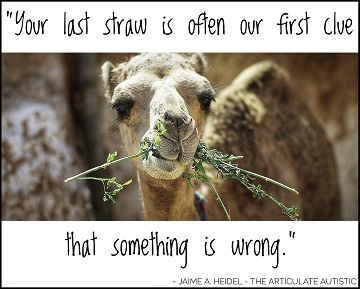
For me, I suppose this was the straw that broke the proverbial camel’s back. And this is not inclusive of all churches. But, sometimes it looks as though Christianity in America has been hijacked, and the children of God are going to need their gift of discernment to be exponentially calibrated just to stay on the right path. And other times it looks as though Christianity has been possessed by Ali Baba and the 40 thieves. And the true meaning of Christianity has gotten lost in some hieroglyphic translation that is far removed from the core of it all.
…At its core, Christianity is not a paywall, a brand, or a transaction. It is an invitation. An open table. A wounded Savior with outstretched arms, not a pricing structure attached to His grace. (Isaiah 53:5-8 KJV)

Yes, accountability matters. Yes, stewardship matters. But access to truth, to hope, to healing—those things were never meant to be reserved for those with disposable income. Remember the widow and the two mites? (Luke 21:1-4 KJV) The Gospel didn’t spread across the world because it was monetized well; it spread because it was given freely, often at great personal cost to those who carried it.
When money becomes the gatekeeper, we risk confusing provision with permission, and support with control. We risk teaching people—especially the hurting, the desperate, the searching—that God is available only after checkout. And maybe that’s what unsettles me most. Not the request for donations, but the implication that belonging, learning, or even listening must be earned financially. That feels dangerously close to selling what was never ours to sell.
So this isn’t a condemnation. It’s a heart check. For me. For us. For the Church. Are we pointing people to Christ—or positioning ourselves between them and Him? Are we building bridges—or toll booths? Because if someone comes searching in the middle of the night, desperate for clarity, hope, or reassurance that God still sees them, the last thing they should encounter is a locked door with a price tag hanging from the handle.
Freely we have received. Freely we are called to give. And maybe, just maybe, returning to that simplicity is exactly what the Church needs right now. What do you think?
Thank you so much for your support and your continued readership. Have a blessed new week!
© Rhema International 2026. Unauthorized use and/or duplication of this material without express and written permission from this blog’s author and/or owner is strictly prohibited. Excerpts and links may be used, provided that full and clear credit is given to Rhema International.
 Rhemalogy
Keith Green decided back in the 70s to give away his albums or cassette tapes of music. He was warned by Christian “leaders” that undisciplined people would bankrupt him within a month; but the Holy Spirit had impressed on him that same verse. He never operated in the red as faithful people gave what they could to keep his music flowing to those who could not otherwise afford it.🤠
❤️&🙏, c.a.
LikeLiked by 1 person
Thank you so much for stopping by and thank you for this inspiring comment. Have a blessed new week!
LikeLiked by 1 person