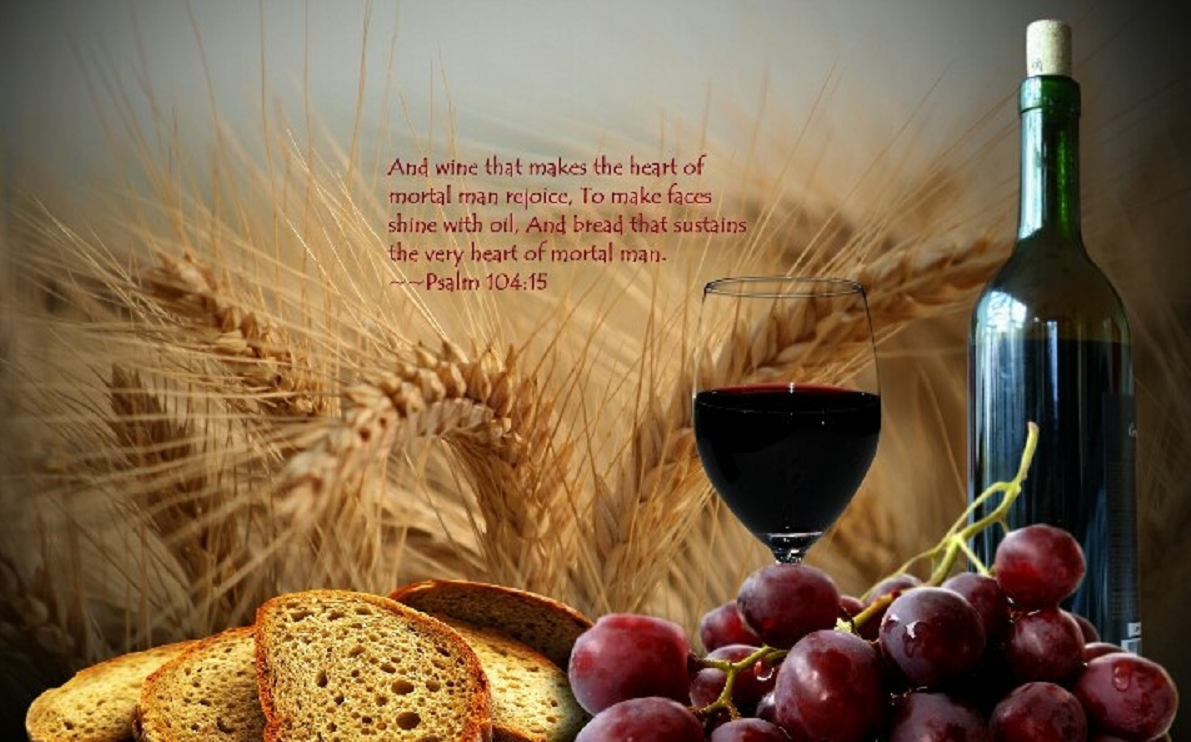
I recently read a blog post that ended on this wise—God’s Provisions:“And wine that maketh glad the heart of man, and oil to make his face to shine, and bread which strengtheneth man’s heart.” (Psalm 104:15) And on this verse I would like to expound…
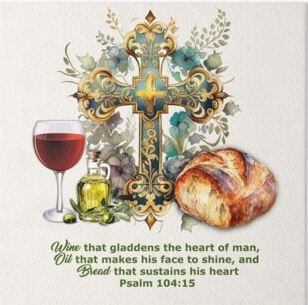
This concise verse offers a rich picture of life’s essentials: joy, dignity, and sustenance. Taken together, wine, oil, and bread symbolize more than foodstuffs; they represent the dimensions of human flourishing—emotional well-being, honor and care, and physical strength.
Wine that “maketh glad the heart” points to joy’s rightful place in life. In biblical culture wine was part of celebration, hospitality, and communal bonding. The phrase doesn’t promote excess so much as the recognition that joy is a gift—something to be enjoyed responsibly and gratefully. Joy loosens the chest, opens conversation, and turns solitude into fellowship.
Oil “to make his face to shine” evokes anointing, healing, and beauty. Olive oil was used for lighting, skin care, and ceremonial blessing. A shining face suggests restored dignity and visible well-being. When we speak of someone whose face shines, we imagine health, hope, and favor. Oil here is a metaphor for what restores outward signs of inner care—rest, compassion, and affirmation.
Bread “which strengtheneth man’s heart” brings us to the most basic human need: sustenance. Bread is life’s staple, the daily work that transforms labor into energy, the simple provision that enables people to function. Strengthening the heart signals endurance and the capacity to meet life’s demands—emotionally and physically. Bread grounds us in the practical realities that make joy and dignity possible.
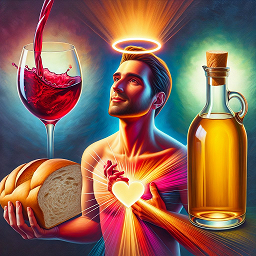
Viewed together, the three images form a holistic ethic: attend to joy, honor the person, and provide for basic needs. They remind leaders, communities, and individuals to balance celebration with care and provision. Practically, this could mean creating spaces for communal joy, offering forms of affirmation that let people shine, and ensuring access to food and resources that sustain life.
Whether read devotionally or reflectively, this verse invites gratitude for these blessings and a call to embody them for others. Joy without bread is fragile; bread without joy is merely calories; oil without care is superficial. The trinity of wine, oil, and bread points us toward a life—private and communal—where the heart is glad, the face shines, and strength endures.
Thank you so much for your support and your continued readership. Have a blessed new week!
© Rhema International 2026. Unauthorized use and/or duplication of this material without express and written permission from this blog’s author and/or owner is strictly prohibited. Excerpts and links may be used, provided that full and clear credit is given to Rhema International.
 Rhemalogy